
Quick summary
T6.1 = familiar, proven, huge conversion ecosystem, simple diesel options and a trusted second-hand market. Great for converters, tradespeople and anyone who values predictability.
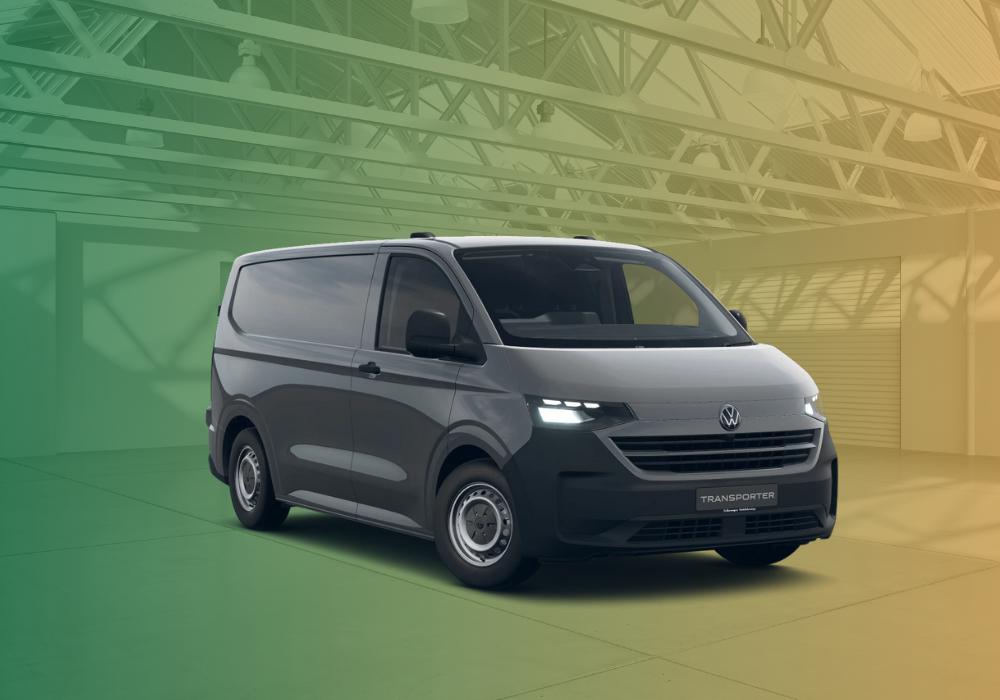
T7 (2025) = larger interior, modern cabin and safety tech, diesel plus plug-in hybrid and full electric options, and updated payloads. A more future-proof choice for Clean Air Zone and emissions-conscious buyers.
Trim badges matter too. On the T6.1 you will hear Startline, Highline and Sportline (plus Trendline on older used vans). On the T7 the climb is Commerce, Commerce Plus, Commerce Pro, Commerce Pro S and Sportline. Engine, wheelbase and body style are chosen separately from trim.
1. Platform, partnerships and what that means
The T6.1 is the latest evolution of Volkswagen's long-running Transporter line: mechanically familiar and well established with UK workshops and converters.
The T7, introduced for model year 2025 conversations (generation on sale from 2024), is a bigger change. Volkswagen developed it with shared underpinnings alongside other modern mid-size vans, including the Ford Transit Custom family. That is why packaging, width and driving feel differ from the T6.1, and why a camper conversion is not always a straight swap of an old layout.
2. Size, load space and payload
Space is where the T7 really shines. The newer Transporter gains length and width compared with the T6.1 in most comparable panel-van stories: a longer wheelbase path and a wider load bay make Euro pallets and bulky kit easier in practice.
The T6.1 already offered payloads and volumes that made it the go-to for converters. If your loads are modest and you like familiar parking dimensions, a good T6.1 can still be the smarter buy. If you regularly fight width or want a more open camper aisle, the T7 is an important upgrade.
Remember: SWB or LWB, roof height, and panel van vs Kombi are configured independently of trim on both generations.
3. Engines, electrification and running costs
The T6.1 relied heavily on Volkswagen's 2.0 TDI diesel range (manuals and automatics, plus 4MOTION on some models). The T7 widens the choice: multiple diesel tunes, plug-in hybrid (eHybrid) and full-electric eTransporter variants. Powertrain choice is independent of trim.
Quick trade-off: diesel remains the pragmatic pick for long distances and heavy towing. Electric and plug-in hybrid cut town running costs and Clean Air Zone friction, but add charging planning and higher purchase prices.
| T7 powertrain (typical UK) | Best for | Notes |
|---|---|---|
| 2.0 TDI ~110 PS | Entry diesel work | Manual or DSG depending on market |
| 2.0 TDI ~150 PS | Most common balance | 4MOTION optional on selected specs |
| 2.0 TDI ~170 PS | Stronger diesel pull | Usually DSG; 4MOTION on selected builds |
| eHybrid ~232 PS system | Mixed / urban commuting | Short EV-only range; confirm tax and grant rules when buying |
| eTransporter (several outputs) | Full electric routes | Battery packaging matters for converters; confirm range for body style |
4. Technology, safety and cab comfort
The T7 cabin is a step up: large digital displays, modern infotainment, and stronger driver aids as you climb the trim ladder. Adaptive cruise and richer assistance suites land properly from Commerce Pro upward.
The T6.1 has solid ergonomics and simpler electronics, which some owners still prefer for reliability and aftermarket conversions. It does not match a well-specced T7 for factory tech.
5. T6.1 trim levels explained
Factory T6.1 panel vans and Kombis focused on Startline and Highline, with Sportline added as the flagship.
- Startline: the workhorse. Cruise control on later vans, modest touchscreen with App-Connect, heated adjustable mirrors and core safety assists. Ideal blank canvas for a conversion.
- Trendline: body-coloured exterior touches, rear parking sensors and a more finished daily feel than a basic Startline.
- Highline: the owner-driver sweet spot on many campers. Body-coloured bumpers, front and rear sensors, adaptive cruise on many examples, Climatic air conditioning and a more car-like cabin.
- Sportline: larger alloys, lowered look, Sportline body kit and premium cabin trim. Popular when buyers want presence as well as practicality.
| Differences | Startline | Highline | Sportline |
|---|---|---|---|
| Type | Fleet / conversion base | Owner-drivers wanting comfort | Lifestyle / flagship camper |
| Exterior | More utilitarian | Body-coloured finish | Full Sportline styling pack |
| Cruise | Standard cruise (later vans) | Adaptive cruise on many | As Highline, premium cabin |
| Wheels | Steels or modest alloys | 16 or 17 inch alloys common | Larger Sportline alloys |
| Camper note | Great blank canvas | Most popular ready feel | Looks finished before furniture |
6. T7 trim levels explained
The T7 series consists of Commerce → Commerce Plus → Commerce Pro. Commerce Pro S and Sportline sit above as styling-led additions.
- Commerce: entry / fleet. Steel wheels, black grained bumpers, manual A/C, rear sensors, cruise with predictive limiter, and a serious safety baseline (Lane Assist, front collision warning with braking, road-sign display).
- Commerce Plus: body-coloured bumpers, mirrors and handles, rear-view camera, front and rear sensors, alarm package. Easier to live with day to day; opens Kombi options in many markets.
- Commerce Pro: the one most owner-drivers actually want. 17 inch Le Mans alloys, power-fold heated mirrors, heated windscreen, automatic A/C, heated seats, wireless charging, adaptive cruise and a fuller assistance suite.
- Commerce Pro S: Pro equipment with a sharper look only. Gloss black alloys, front splitter, rear spoiler, grille detail and illuminated cabin touches. No mechanical change versus Pro.
- Sportline: flagship. 19 inch dual-finish alloys, Eibach lowered suspension (about −29 mm), Matrix LED headlights, bespoke bumpers and skirts, heated eco-leather sports seats.
| Differences | Commerce | Plus | Pro | Pro S | Sportline |
|---|---|---|---|---|---|
| Type | Entry / fleet | Mid comfort | Full comfort kit | Pro + styling | Flagship |
| Wheels | Steel + mobility kit | As Commerce | 17" Le Mans | 17" gloss black + splitter | 19" diamond-cut |
| Suspension | Standard | Standard | Standard | Standard | Lowered Eibach |
| Climate | Manual A/C | Manual A/C | Automatic A/C | As Pro | As Pro |
| Seats | Fabric | As Commerce | Heated | As Pro | Heated eco-leather sports |
| Cruise | Cruise + limiter | As Commerce | Adaptive | As Pro | As Pro |
| Parking | Rear sensors | Front + rear + camera | As Plus | As Pro | As Pro |
| Lighting | LED | As Commerce | As Plus | As Pro | IQ. Light Matrix LED |
The short version: Pro is the equipment jump. Pro S is cosmetics on Pro. Sportline is cosmetics plus lowered suspension, Matrix lights and the premium seat pack.
7. Conversion and camper considerations
The T6.1 benefits from years of purpose-built furniture kits, pop-top crowns and shelving systems, so conversion companies can work quickly and cost-effectively.
The T7's different floorplan, slightly wider load bay and, for BEV models, battery or underfloor packaging mean converters need to adapt layouts and wiring. For a new build designed around a T7 you gain modern comforts and more usable width. For retrofit-ease the T6.1 remains faster to work with in the short term.
Tip: If you're planning a fresh T7 conversion or upgrading an existing one, remember that width and battery locations are the two biggest changes to account for compared to the T6.1
8. Costs, warranty and resale
New T7s carry a modern-spec premium, but current warranty and dealer packages can make them attractive for private buyers who want the newest cab.
The T6.1 used market remains strong. Proven reliability and a thriving conversion market keep values healthy. If short-term cost and predictability matter more than future emissions compliance, the T6.1 remains a sensible buy.
9. ULEZ, emissions zones and practical advice
For UK operators, BEV and cleaner diesel T7 options make it simpler to future-proof routes in expanding Clean Air Zones. If many of your miles are urban, an electric or plug-in hybrid T7 can reduce daily charges despite a higher purchase cost. If you are motorway-heavy or need maximum towing range, diesel remains the pragmatic workhorse.
10. Final verdict: who should pick which van?
- Choose the T6.1 if you want proven simplicity, the broadest conversion marketplace, lower short-term purchase costs and known maintenance patterns.
- Choose the T7 diesel if you need more load space and payload, modern safety tech, and a van better positioned for the next 5 to 10 years without full electrification.
- Choose the T7 BEV or eHybrid if you mainly operate in towns and cities, can charge reliably, and want to cut local running costs and charges.
- On T7 trims, Commerce Pro is the balanced owner-driver pick; Pro S and Sportline are mostly about style.
Want more help?
We are always happy to help people figure out what vehicle is right for them. Tell us seats, berths, budget and whether you lean T6.1 or T7.






 Spidersnet